Showing posts with label PhilipsLighting. Show all posts

Monday, 3 August 2015

COMING SOON! The New Philips Master 5.4W GU10. Available for Pre-Order

The newest product to be added to the Philips lighting range is the 5.4W Master GU10, this is new 50W equivalent that supersedes the  extremely popular Philips Master 5.5W GU10. In addition to the superb new design of this lamp, this 'upgrade' also offers a longer lifetime, a better colour and a higher lumen output for a lesser wattage. 

We have compared the two products in colour 830 40° and 930 40°  so that you can see the differences between the two. 


Product specification of Philips Master 5.5W GU10 830K 40°
5.5W
375 Lumens
Dimmable
Instant Full Light
Equivalent to 50W
Dimensions: Length 55mm x Diameter 50mm
40,000 Hour Lifetime

Colour 830


Product Specification of Philips 5.4W GU10 930 40°

5.4W
378 Lumens
Dimmable 
Instant Full Light
Equivalent to 50W
Dimensions: L57mm x Diameter 50mm
50,000 Hour Lifetime
Colour 930
Improved Lens Design


So, the main differences between these two lamps is the increase in lifetime, the higher lumens, the new design and the new colour of 930 instead of 830. The colour 930 is considered a much better colour due to it being higher up the colour spectrum. With all specification taken into account, we can safely say that this new 5.4W GU10 is a much better product than the 5.5W GU10 it has superseded. 

We currently have in stock the 5.4W GU10 in colour 940 40, please click here to order. The other colours and degree beams are available for pre-order. Please email sales@theledspecialist.co.uk or call us on 0118 950 7125. 


Thursday, 23 July 2015

SPECIAL OFFER! Philips GU10 Twin Packs- Get them before they're gone!


We have a very special offer on two different twin packs of Philips LED GU10s, these lights are perfect for home use in your kitchen, living room and bathroom. 
These twin packs come in two different wattages; 3.5W which is equivalent to a 35W halogen and 4.5W which is equivalent to a 50W halogen. These lamps last for a long lifetime of 15,000 hours and have a beam angle of 36°. They can provide exceptional energy savings and are retrofit meaning they can swapped like for like with your existing fittings with no maintenance costs. The easiest and cheapest way to switch your home to LED!


3.5W as low as £5 for a pack!
4.5W as low as £6.40 for a pack!


To see the full information for the different twin packs please click here.

Only whilst stocks last- Hurry, get them before they're all gone! 


Wednesday, 24 June 2015

The best choice for tubes: Philips LED

Philips LED Tubes are the safest choice for replacing your fluorescent tubes. 


Watch the video on why Philips LED tubes are the best to replace your fluorescent tubes with. They are safe, reliable, of the best quality, offer huge energy savings and long lasting performance. Philips is a brand you can trust and these tubes are worth every penny. Philips tubes comply with the international standards and are validated and certified by credible third party laboratories. 

Here at The Led Specialist, we think Philips tubes are the best choice. Click here to see the full range that we stock, 

Start saving energy by replacing your fluorescent tubes with Philips LED tubes NOW! Prices soon to be reduced! 

Thursday, 23 April 2015

The Future: Internet of Light as part of Internet of Everything

Lighting as the bridge between physical and digital.


The Led Specialist attended Philips' most recent webinar on The Internet of Light and semantic lighting by Zary Segall, professor at the Royal Institute of Technology, Stockholm. At the start of this webinar Segall states its purpose, to start thinking about 'how we are using light to connect the physical and digital world in ways we never dreamed of.' A concept that at first seemed desperately confusing to us but as the webinar went on, our understanding of it increased and began to make us excited. This article is a break down of that webinar and the exciting ideas that is explores.

 Smart Lighting is all about user experience, before beginning the webinar, Segall took a poll asking the question,  has your experience with your mobile phone fundamentally changed in the last 25 years? The answer to which is pretty obvious for most but he also asked attendees of the webinar to answer another question for the poll, has your user experience with your kitchen lighting changed fundamentally in the last 25 years? This created the opposite answer. For the last 25 years the way we interact with our kitchen lighting or delving deeper; home lighting and lighting in general has not been challenged or changed and remains extremely simple but Segall poses the question, what if light could understand you? 

User experience is all about you and a more modern description of you is you as a physical sense and you in a digital sense, or as a digital representation of yourself. The way that google defines you and things about you and all the information that has been put together about you through the digital world. There are many features of this you, which Segall refers to as the W, the double you. For instance, the bio-mechanical W is the digital model of the way we move, the way we move an arm, a leg, they way we touch things and the way we eat. If we take the way we eat further; a digital model could understand that you have eaten something and know how many calories that you have intaken by connecting to the internet and discovering how many calories that item of food contained. Further still, it could analyse the choices you make when eating food to decipher your health and even further the W could eventually understand and interpret your cognitive processes, i.e. your thoughts and thought processes. Although this all sounds extremely futuristic and something out of i-robot, Segall assures us that we are so close to achieveing this in the not too distant future. 

In addition to the bio-mechanical W, the digital you also includes; the emotional W, the physiological W and the semantical W. Semantical meaning relating to meaning in language or logic. Segall's next concept relates specifically to this and the semantic W would understand the context and the task that it is doing as well as understand the relationship between humans and objects. Segall explores this by asking how we model the interaction between people and objects? Light. Light is the answer, light is what actually connects us to an object, it brings us information, everything we do includes light. How a piece of information is transmitted is through light, from writing it down to reading it. The Semantic W applied to this means that light becomes the most important semantic object. 
Segall gives this example, a piece of paper on a table that a light is shining on, the light will absorb the information that is on the piece of paper and search for more information on what is on the text and then this extra information can be projected by the light. The light could also be tuned to certain objects and people, so if you move the piece of paper, the light will follow. 
This interactivity of light is shown in another example, map folding, one of those annoying things that you just can't seem to get right and Segall admits that he himself is a terrible map folder. The solution he presents for this is light. The map is placed on the same table from before and the light illuminates instructions and markers as to where the map should be folder. Once each fold has been carried out it shows the next fold in the process until the map is folded perfectly. 

The next example of this is really quite incredible if slightly unnecessary, using light to make a cup of tea. Picture this; cups and teapot on table, teabags then placed on table. The light shining on the table finds information about the teabags and how they should be brewed at 97°C for 2-3 minutes. When the boiling water then gets poured into the teapot the light on the teapot is red until it reaches the optimum temperature of 97°C when it turns green and the light produces text reading 'okay to brew'. Once the tea has been brewing for the 2-3 minutes with a timer and red light shown the light then switches to green with,  'tea ready'. When the tea is then poured into a cup the light projects the different temperatures at which you may want to drink your tea which you can touch. The light then goes red until your chosen temperature of the tea is reached.  

The above concepts are pretty amazing although we are left questioning the need for this technology. Tea making and map folding (although extremely important) are not the most crucial processes in our lives or ones that specifically need improving, but perhaps this technology will be applied to more critical processes when it has been improved further. 

The final few examples of using semantic light are uses such as for mobile shopping solutions, making books interactive through light and even decorating and re-decorating your home instantly. The point that Segall finishes on  is that our physical and digital space is becoming one, light is what connects us and our entire world becoming clickable. 

Monday, 23 February 2015

'Largest Street Lighting Upgrade' Signed by Philips


The Spanish capital city of Madrid is having its entire street lighting system replaced by Philips, a total of nearly a quarter of a million luminaries are to be upgraded. 
Lighting up Madrid
Lighting up Madrid

Since Philips announced their split in late 2014 their lighting division's annual sales have fallen by 3% to a mere $6.9 billion for the last year. CEO Frans van Houten has commented to investors that the North American division's performance was 'unsatisfactory' and because of this he has appointed Amy Huntington as the new head of North America's lighting business. He also commented that China's sales had also dropped due to deteriorating market conditions. This is different to the wider divisions performance which has continued to grow rapidly due to selling of LED-based solid-state lighting products in addition to a contract to replace the entire street lighting system of Madrid.

Philips is also planning to sell the automotive lighting unit in addition to Lumileds, the LED chip making branch. Lumileds commented that, 'The company is in discussion with external investors for the combined Lumileds and automotive lighting businesses and expects to complete translation in the first half of 2015.'
These two divisions composed of 8300 employees have delivered sales of $1.4 billion.

Madrid project

Philips has estimated that the market for high-power LEDs will grow at an annual growth rate of 17-21% up to 2018, whilst the growth of the the overall lighting market is estimated to be 3-5%. The lighting industry is rapidly transforming from inefficient products to highly efficient goods and now demands extreme innovation.

The CEO has claimed that Philips is outlaying over 30% more than its closest competitor in research and development to set a higher pace of technological advancement. Van Houten expects that the emerging market of data-enabled lighting systems will expand the overall market by roughly $1 billion in the next few years.

Whilst all this is going on, Philips have undertaken a monumental project to replace street lighting in Spain, Van Houten commented that, 'We signed a contract to provide the city of Madrid with what is the world's largest street lighting upgrade to date, involving the replacement of 225,000 luminaries.' He also commented that the new system would create a saving of 40% in energy which would mean the installation cost would be paid back almost instantly and mean no extra cost to Madrid's citizens.

The new system is said to feature an 'integrated command centre' which means that the entirety of the street lighting system could be controlled by a single control point.
Another project that is set for the future will see the distribution of 1.5 million Philips LED lamps in India to over a million households. This should cut lighting energy consumption by 80% and would save 80 MW in electricity generation.
With these projects Philips lighting is looking to have a prosperous year ahead but 2015 will present challenges due to the $400 million in costs due to the split and reconstruction of the company.


Tuesday, 16 December 2014

Philips Light Up The Festival of Lights

Philips Colour Kinetics LED connected lighting transforms the banks of the River Rhone.


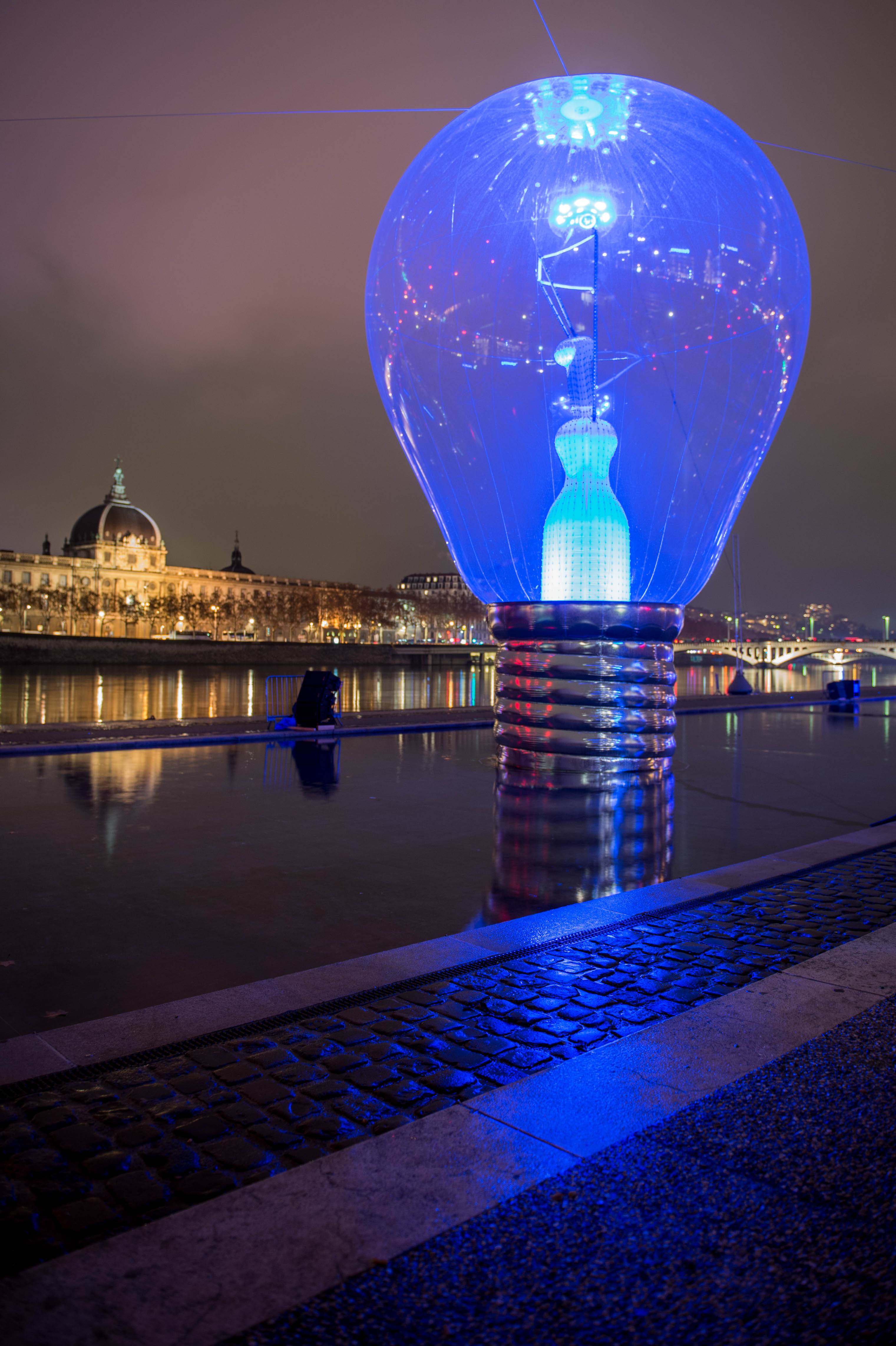
Philips Lighting collaborated with French artist Severine Fontaine, to create the centre piece for the 2014, Lyon Festival of Light. The world famous Festival of Lights in Lyon, France is the world's principal creative lighting display event. This year the show ran from the 5th-8th December.  

The six minute, centrepiece show, spanned 80 metres of the River Rhone's banks. The phenomenal centrepiece, named "Incandescence" celebrated the importance of light in human development. 

"Incandescence" took six years to create, it featured nine illuminated domes, shaped like incandescent light bulbs.Each dome was the size of a small family car. The six minute show explored the symbiotic relationship between the human race and light. The iconic incandescent light bulb was used to represent the historic relationship between humans and artificial light, exemplifying it's often forgotten impact on human development. 

"Incandescence's" co-creator, Severine Fontaine said: "I chose to work with Philips, which is a prestigious partner, providing high-quality and high-tech products that enable spectacular light effects. The Philips technology allowed me to explore and create emotion, working light with great delicacy as if it were a musical score. Philips provided more than just products, the team also bought passion that allowed me to realize my concept and light scenario in optimal condition for the artistic quality of the art work."


Friday, 5 December 2014

Evaluating Light Output: How many Watts is that LED?

When looking to define the output of a light source most people will look for its wattage. Traditional incandescent lighting has made it a rule that a 100 watt lamp will output more light than a 60 watt lamp. This is because all incandescent lamps use the same filament material which is heated to the same temperature, so the only way to increase the light output of these lamps is to increase the wattage. This is one of the main reasons why incandescent lighting wastes so much energy. 
However, LED light sources are much efficient at converting watts to lumens. Each material which can be used withing LED sources themselves has its own light extraction efficacy. For this and other reasons, two different LED sources can consume the same wattage but different lumen outputs.  Therefore watts can not be used as an index of light output in LED light sources. 
Evaluating the 'brightness' of LED sources for each situation requires you to think differently about lighting. A 60 watt incandescent lamp emits a total light output of roughly 800 lumens, but the light is equally emitted in all directions. When you're reading at your office desk, your book does not receive all the 800 lumens from your desktop lamp, nor should it need to. 
The most important measurement is delivered light. According to the IES ( Illuminating Engineering Society) serious reading requires 500 lux on the page. Many linear LED under-cabinet fixtures and task lights can deliver this level of light whilst consuming far less than 60 watts. 
So, wattage is no longer a relevant measurement to understanding the light output of a lamp, you might want to consider this when choosing which LED  lamp you require. 

Please visit www.theledspecialist.co.uk to see our full range of LED lighting. 


This blog post has been adapted from Philips' evaluating light output: technical brief. 

Monday, 27 October 2014

Philips declare a loss after announcement of lighting split.


Philips has posted a £81 million net loss on its third quarter earnings only three weeks after its announcement of intentions to split from its lighting division.
Philips has blamed this loss on slowing markets in China and Russia and a £290 million patent law suit in its healthcare division.
Comparably,lighting sales declined 1% Year on Years but LED based sales increased by 28%. This was counteracted by a 14% decrease in overall conventional lighting sales. The LED lighting division in Philips now represents 40% of total lighting sales, compared to 30% this time last year.
On the 28th September, the dutch giant made public its decision to split off its lighting business to focus on its high margin consumer and healthcare divisions. The separation will result in the creation of two new companies, Lighting and HealthTech, but these will both continue to use the Philips brand.
A Philips spokesperson for Philips has denied that the announcement of the split was to distract shareholders from the disappointing third quarter losses, 'We are talking about two separate things', stated the spokesperson, 'One is the strategic announcement to do something that we think is in the best interests of both entities of the business. And the results are a snapshot of something that we do every quarter as a listed company you have to.'
They continued, 'As our CEO said, we're not satisfied and if you look at the numbers it's clear that you cannot be satisfied. But having said that, if you look at the numbers there are lots of incidents in there. If you exclude those, we do see some improvement in the underlying business.'
The growth in LED sales and the considerable fine for the Philips healthcare division might seem ironic given Philips has decided to move away from lighting to focus on healthcare.

Tuesday, 23 September 2014

Philips Diamond Spark Candles used in Harrods Wedgwood Concession.

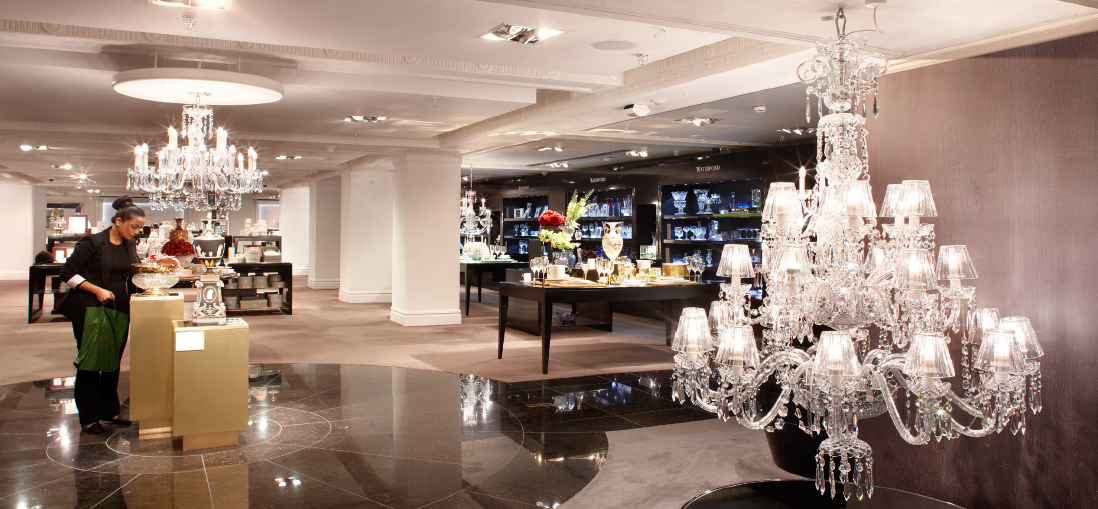
Harrods in Knightsbridge, London, the most famous department store in the world is now home to Philips LED Diamond Spark Candles, the next generation of MasterLED candles. The Wedgwood concession in store where the Candles have been used is lit by chandeliers. With Wedgwood being a global brand acclaimed for its luxury home and lifestyle products it was essential for the chandeliers to have the best possible lamp providing the best possible illumination.

The chandeliers were originally fitted with 15W halogen candle lamps when the Wedgwood Concession was first opened. Although they created the correct visual effect, their high heat output meant that the comfortable conditions that Harrods requires could not be maintained by the air conditioning. Furthermore, the inefficiency of the halogen candles was wasting an awful lot of energy. 

To solve these problems, Harrods initially replaced the halogen candle lamps with standard LED candles but these did not fulfill the sparkling standard that was provided by the original halogen lamps. The Philips Diamond Spark Candles were the best solution. The next generation candle lamps feature a revolutionary lens shape and design that refracts light differently in order to create incandescent-like, glittering light effects. 

The MasterLED Diamond Spark candles have brought the sparkle back to the Wedgwood concession. Not only do they enhance the appearance of the chandeliers themselves but they make the luxurious Wedgwood products even more appealing to customers. By making this change from a 15W lamp to a 4W (now 3.5W) Diamond Spark candle, Harrods has reduced its electrical installation load by 74%, creating a huge saving on their energy consumption. The candles also produce much less heat than the halogen lamps meaning that their air conditioning costs have also been cut. In addition to this, the candles have a lifetime of 20,000 hours which means the lamp replacement cycle will be extended and maintenance costs reduced. 

Mark Fleming, Harrods Engineering Technical Manager commented that, 'The chandeliers now look brilliant and the shop floor staff are very happy with the new candle lamps. We will be specifying them for all of the chandeliers throughout the store in the future.'

If you want to replace your outdated halogen candle lamps for these fantastic Diamond Spark candles please go to www.ledspecialist.co.uk to purchase yours now!